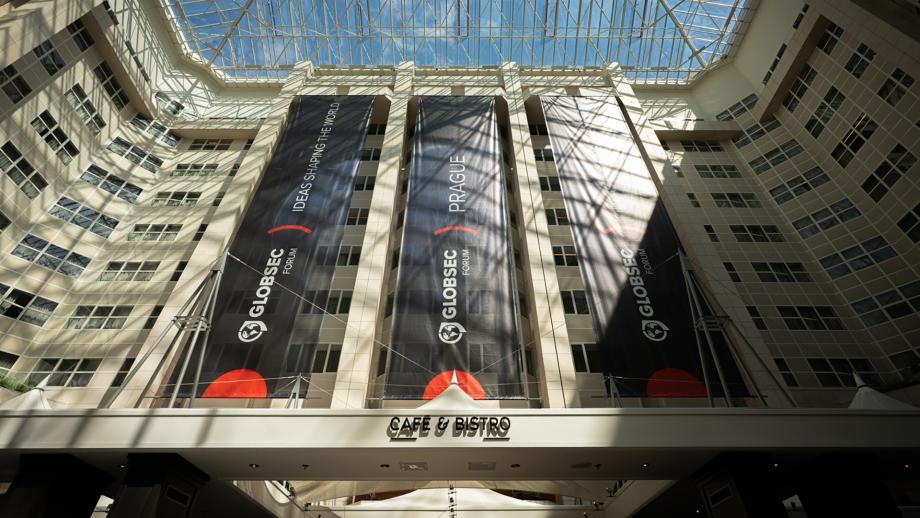
The Eurasia Policy Institute attended the GLOBSEC Forum 2026 in Prague, where global leaders, policymakers, experts, and civil society representatives discussed the growing challenges facing democratic societies amid geopolitical fragmentation, technological disruption, and rising authoritarian influence.
The Eurasia Policy Institute attended the GLOBSEC Forum 2026 in Prague, where global leaders, policymakers, experts, and civil society representatives discussed the growing challenges facing democratic societies amid geopolitical fragmentation, technological disruption, and rising authoritarian influence. The Forum highlighted the increasing strategic importance of Eurasia in shaping Europe's future security, connectivity, and democratic resilience, particularly in the areas of energy security, digital governance, and regional cooperation.
During the event, the Institute engaged in discussions on democratic resilience, AI governance, hybrid threats, and the protection of civic space across Europe and Eurasia. Building on the Forum's key takeaways, the Eurasia Policy Institute emphasized the need for stronger cross-regional cooperation to counter disinformation, support independent media, strengthen cybersecurity capacity, and protect democratic institutions from external influence and corruption networks. Particular attention was given to the growing impact of emerging technologies and information manipulation on open societies.
The Eurasia Policy Institute concluded that future Europe–Eurasia cooperation must go beyond traditional geopolitical frameworks and focus on long-term democratic resilience, technological accountability, and youth engagement. The Institute reaffirmed its commitment to supporting dialogue, research, and policy initiatives that strengthen cooperation between Europe, the South Caucasus, and wider Eurasia in addressing shared democratic and security challenges in an increasingly complex global environment.
Photo credits: GLOBSEC.